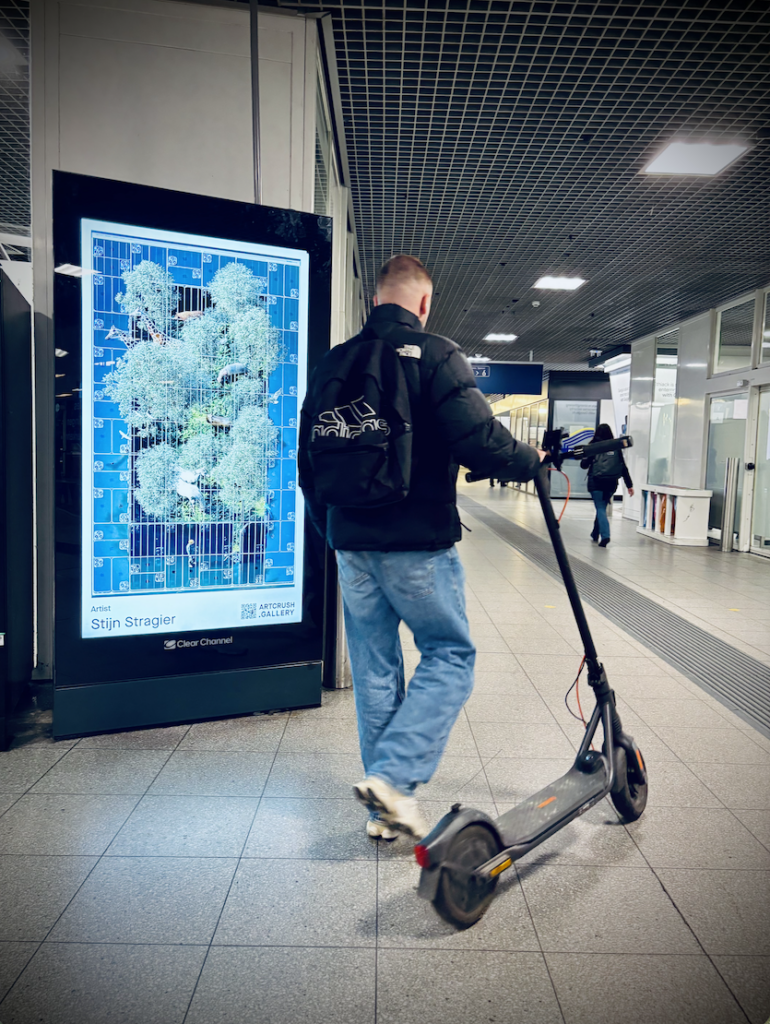
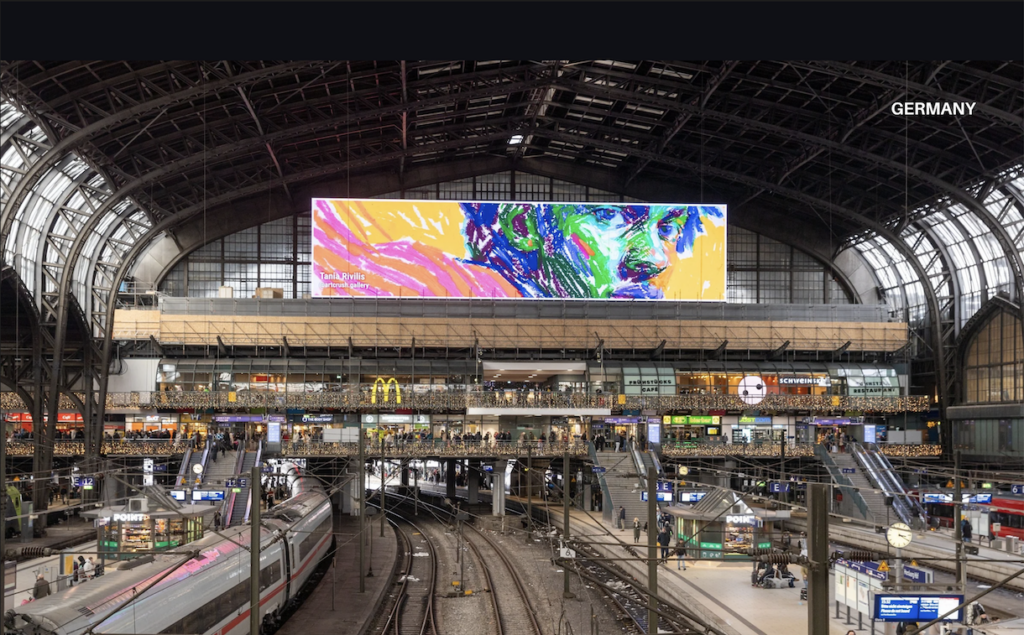
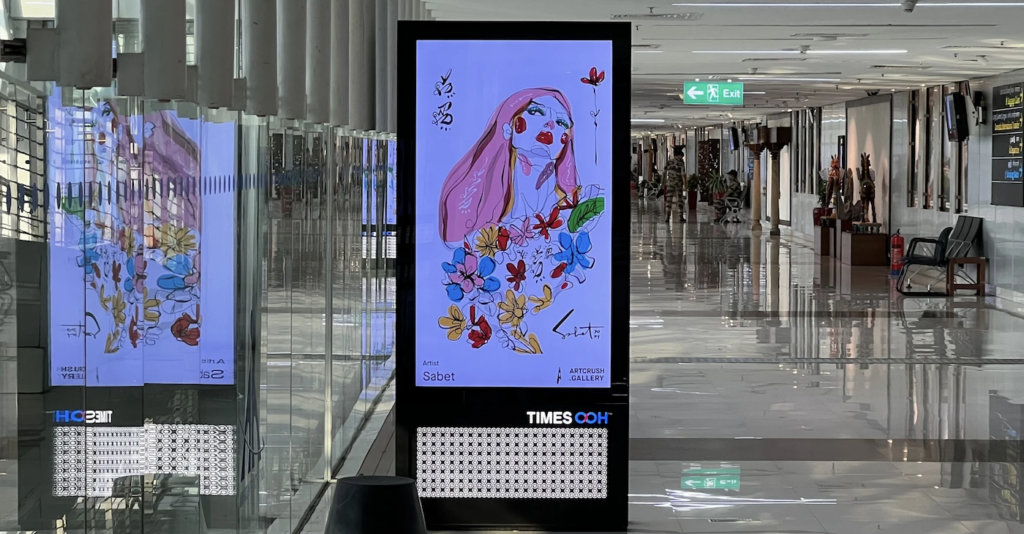
‘Having a crush on art’ is the idea behind the Belgian company Artcrush, which promotes the artists it admires. But it does so in a unique, original… and effective way. Artcrush can be seen in a variety of locations, with screen displays of different sizes, located in unexpected places, which offer viewing rhythms similar to scrolling on a smartphone, making it feel familiar.
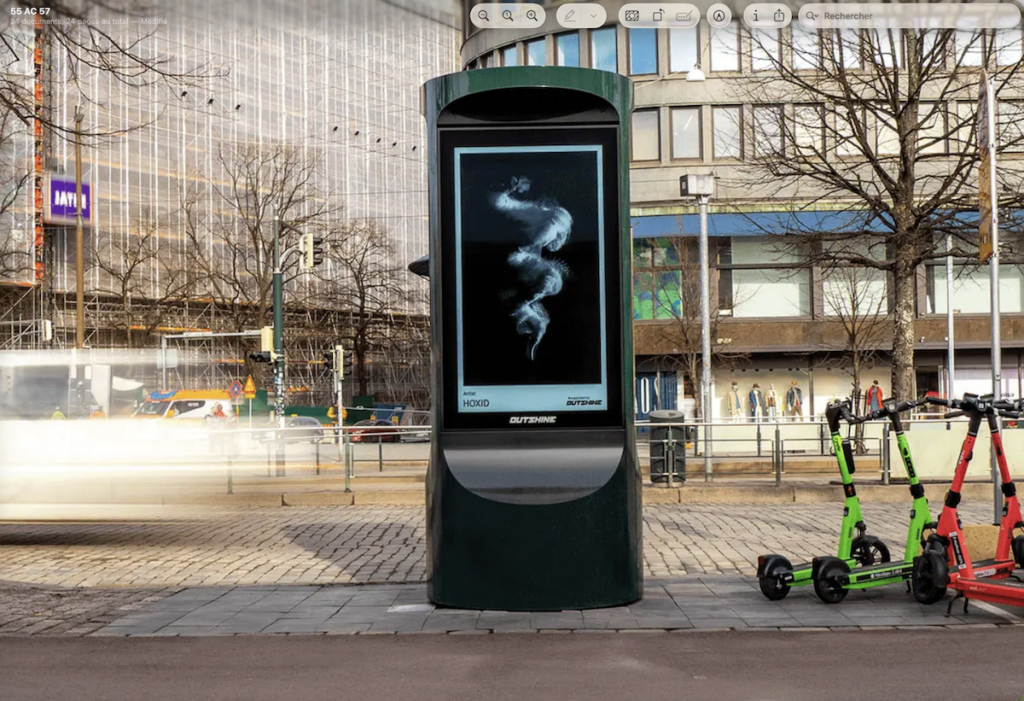
Everything is designed so that the public encounters artistic images in unexpected places and settings, thus enhancing their visibility. As a result, the 2025 .ART Digital Innovation in Arts and Culture Award (DIAC) gave the first prize to Artcrush. This global award recognizes innovation at the intersection of art and technology. Artcrush aims to redefine the relationship with art by making it accessible to everyone. Its slogan resonates like a mantra: ‘The street is our gallery’.
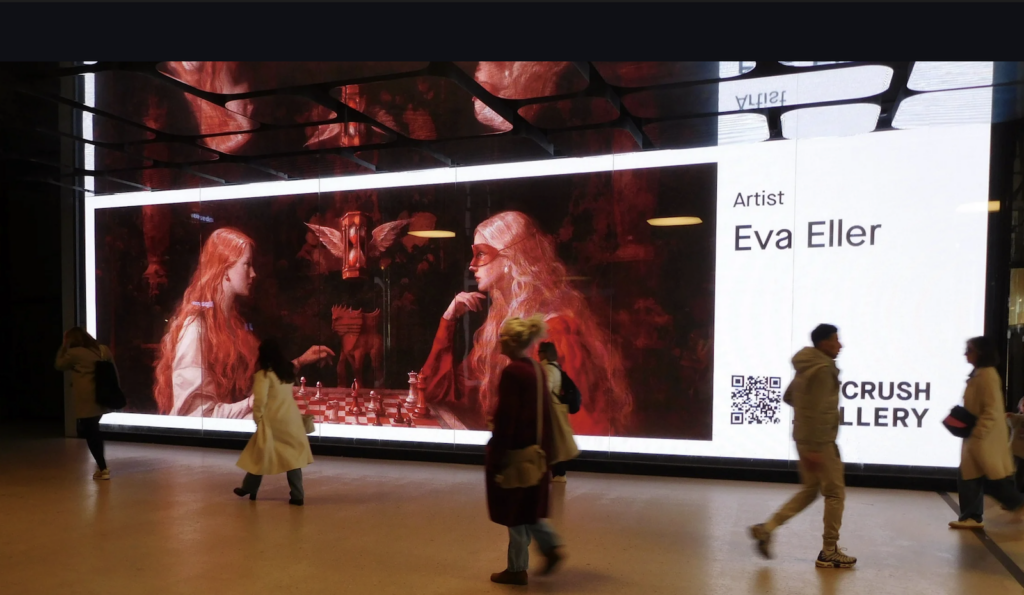
New technologies are constantly transforming the cultural landscape. Until recently, the traditional path to fame for an artist followed the long — and often arduous — road from a small local gallery to an exhibition in a prestigious venue, a guarantee of recognition. Once this summit is reached, one more challenge remains: how to attract an audience. Such a process requires time, media expertise, and a substantial budget. In short, exhibiting effectively remains slow, expensive, and complicated. By being present in public spaces 24/7, Artcrush aims to simplify and accelerate this process.
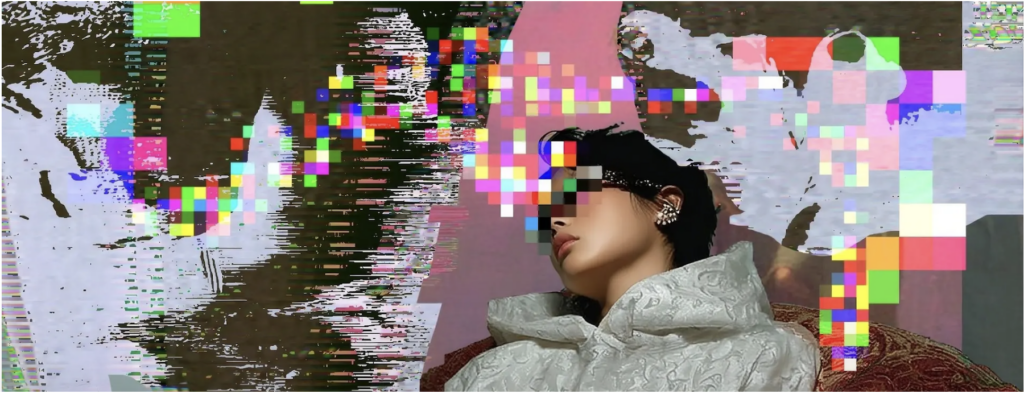
Andy Warhol, a former successful advertising executive, shook up the art market in the 1960s by treating his work as a commercial product — which it already was, though no one dared say so out loud — and by surrounding himself with marketing and media professionals. Twenty years later, Jeff Koons added an industrial and technological dimension… with the notable help of Elon Musk, and also of Richard Feynman, Nobel laureate in physics, who used scientific curiosities to benefit artistic activity. Today, street art is spreading like wildfire through illegal, subversive, ephemeral actions, freely accessible to passersby. In each of these cases, art constantly redefines its boundaries to reflect the reality of the environment in which it exists.
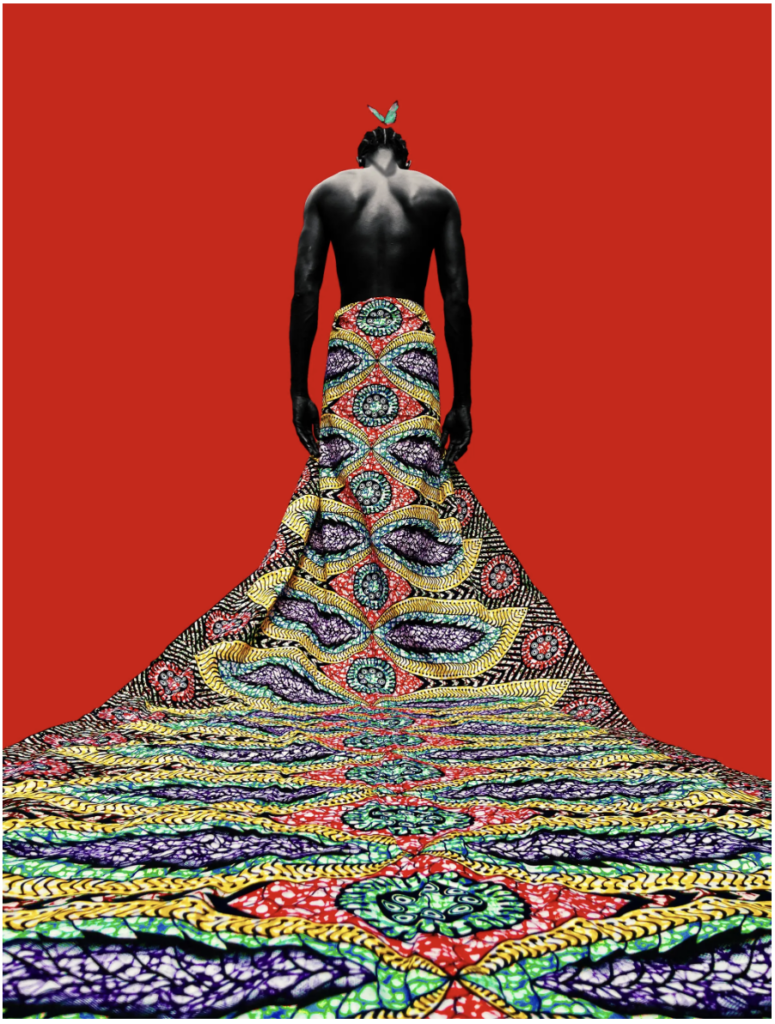
Digital art, linked to computers, emerged in the same time period, i.e. the late 20th century, and now boasts hundreds of thousands, even millions, of artists worldwide. How do you bring the most talented to the fore? Artcrush approaches this in two ways: either through its own teams or by calling upon external experts. Internally, Artcrush relies on curators who have worked for leading art valuation firms, or who manage a top-tier art collection. They primarily handle contemporary art from Europe and the United States. For more specialized markets, such as photography, or less familiar ones like art from India or Peru, for example, Artcrush entrusts its work to external collaborators with expertise in these fields.
It’s important to remember that art for art’s sake and advertising are recent concepts in human history. For millennia, artistic activity served as a vehicle for beliefs, conveying prevailing social values, ideologies, and religious teachings. Art played the role of advertising for those in power. It was a tool designed to gain support and, incidentally, to create social bonds. Simply replacing the word ‘support’ with ‘buy’ reveals that advertising plays the same role, but within the contemporary social context.
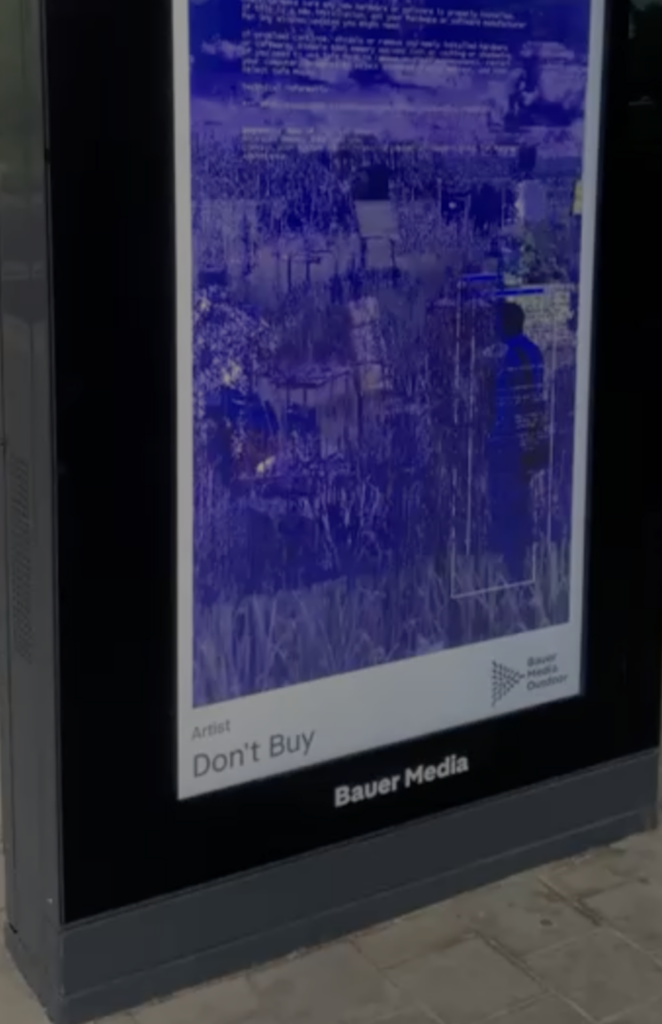
Art and advertising are closer than we often think, and some of the artists featured on Artcrush question the system from within, asking provocative questions, as for example does the artist Don’t Buy. His name encapsulates his mission, which contradicts the very system designed to encourage the opposite of what he claims to want. Is it conviction, irony, or a clever way to distinguish himself from his peers? Whatever the reason, it’s clear that Don’t Buy, a young Russian born in 1997, was trained in the hacker mindset, and that he is a significant figure in the art world.
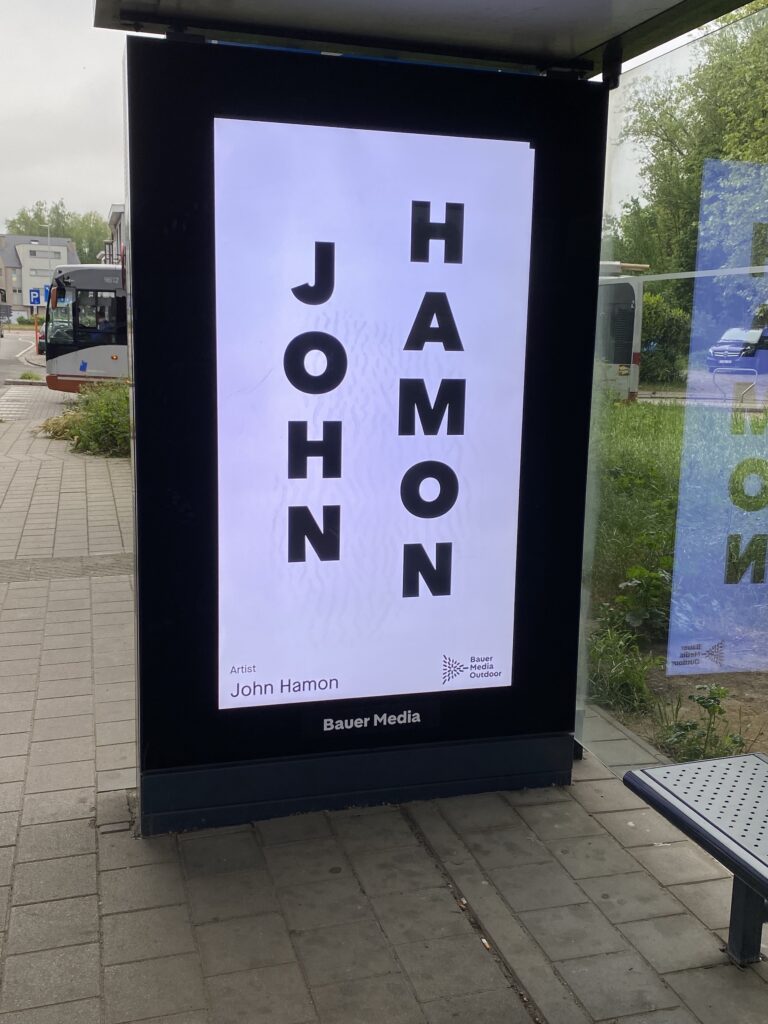
As for John Hamon — to give just one example — he seizes the opportunity by displaying only his name, in large, capital letters, in black on white, knowing that a signature is often more impactful than an image. It’s a shrewd move, as it’s doubtful whether the current art establishment would allow such a radical approach.
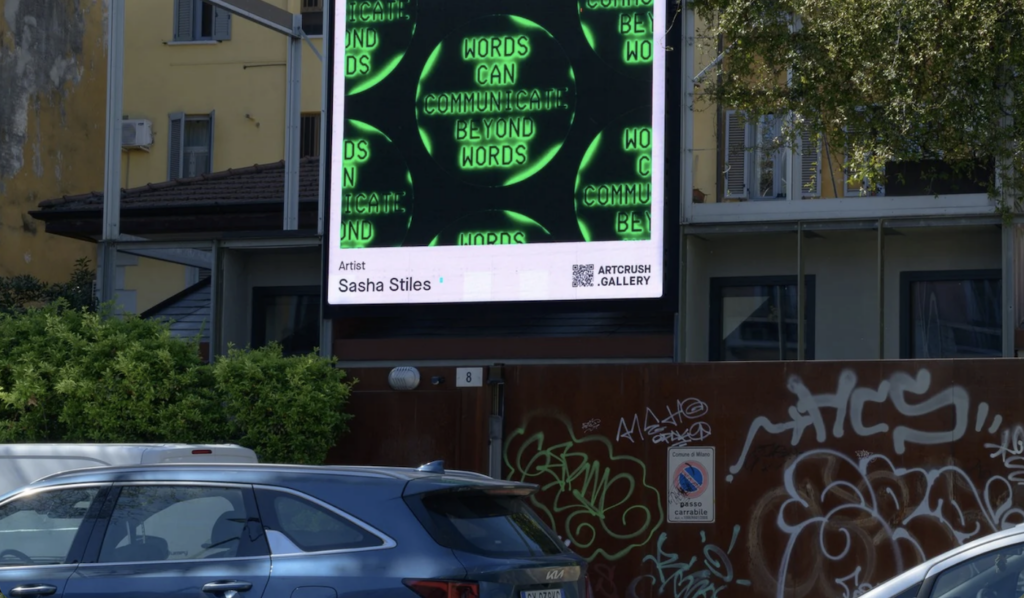
With ‘Words can communicate beyond words’, Sasha Stiles shares a formula that is both imperative and imprecise, where everyone can project their own convictions, however contradictory they may be.
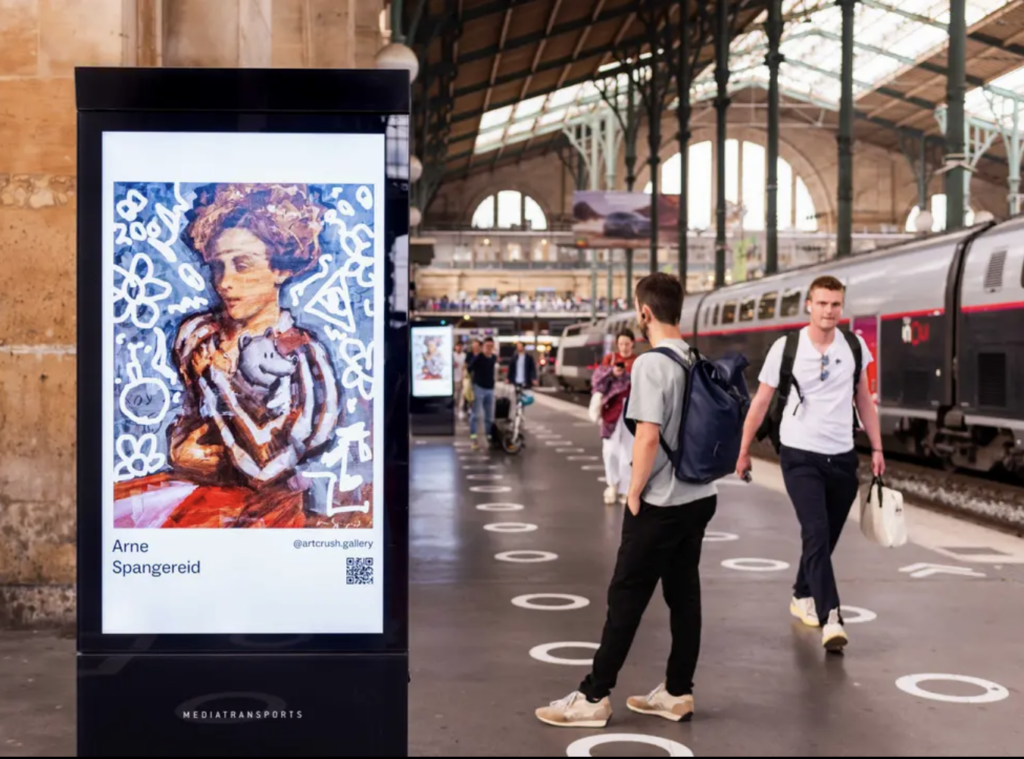
While advertising and artistic practices are usually mutually exclusive, this combination delights both parties, given how much advertisers dream of being recognized as artists, and how much artists aspire to have access to advertising revenue. Everyone is happy.
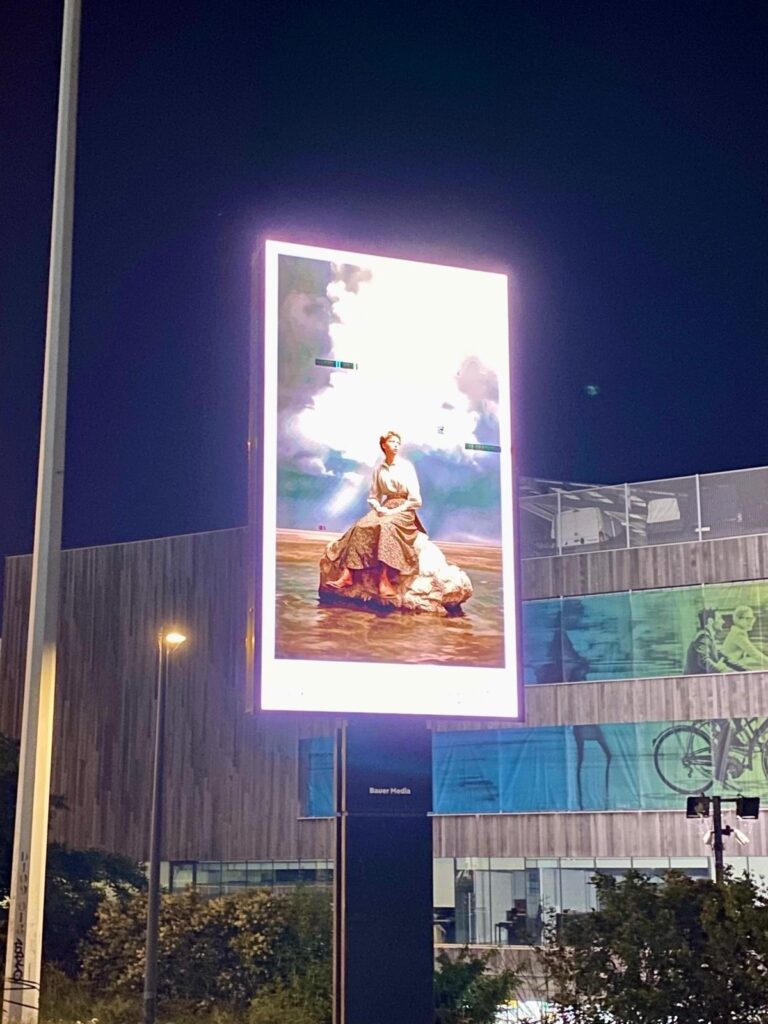
The public finds the invasive intrusion of advertising in the middle of watching a film, a sporting event, or a cultural program irritating. Artcrush uses the same approach, but cleverly, by reversing it: a work of art — ostensibly non-commercial — slips into the flow of images, videos, and advertisements, while adopting the same visual language. It almost goes unnoticed.
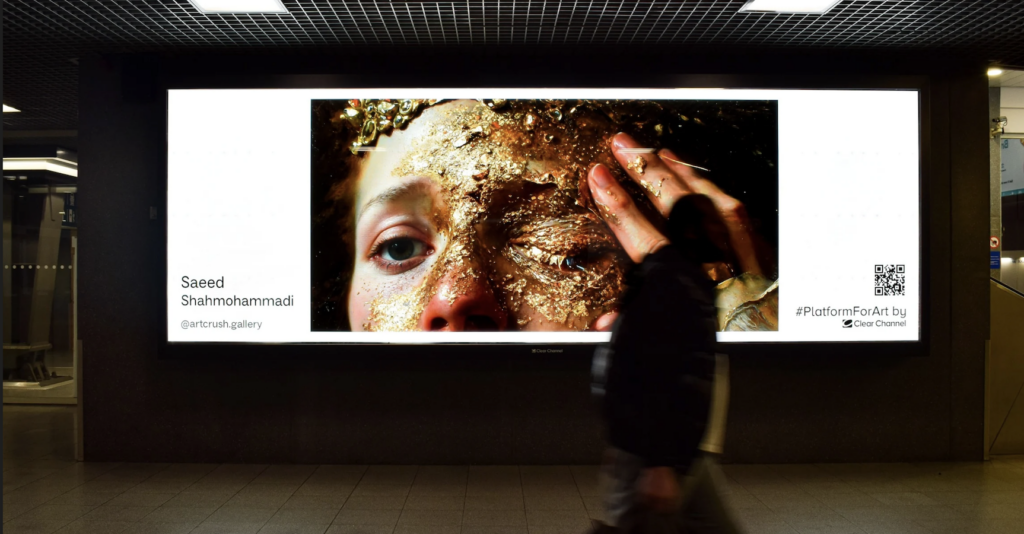
It will be interesting to observe the long-term consequences of art and advertising coexisting in the same spaces. Will these two worlds remain separate, or will exchanges occur? If so, what kind of exchanges will take place? In what direction and with what consequences?
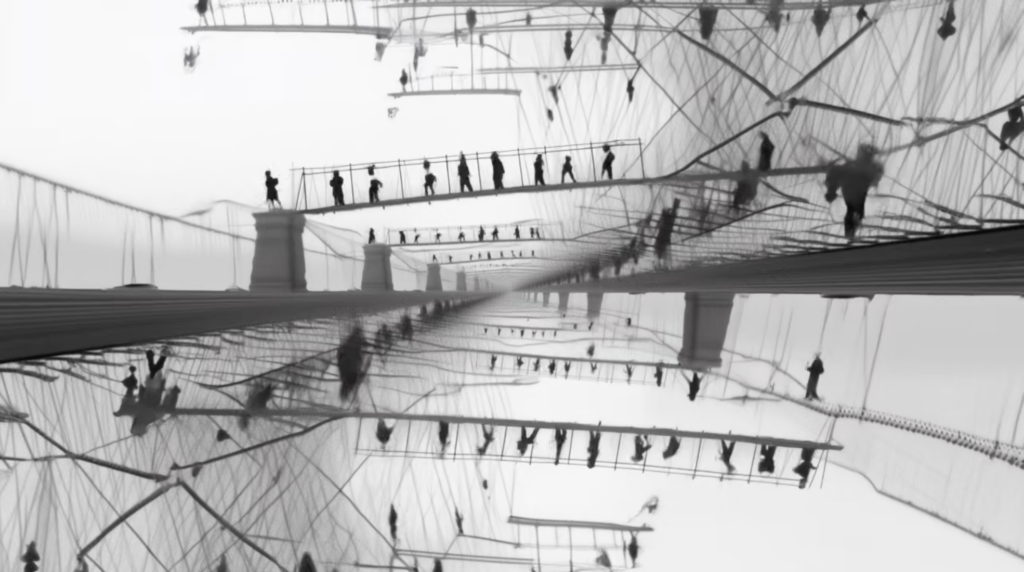
The exhibition spaces offered by Artcrush are designed as luminous showcases, far more effective than traditional paper prints, posters, or printed magazines. These variations in format and their arrangement within the environment create a visual dynamism that is sure to capture the attention amidst a sea of perceptions.
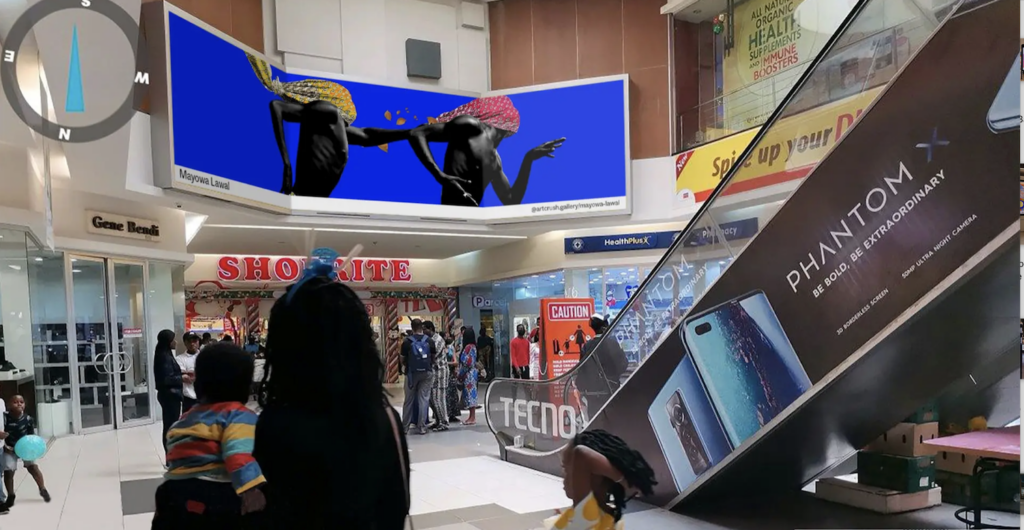
Globally, Artcrush currently operates 25,000 billboards across 15 countries. The company partners with advertising agencies and outdoor advertising companies, strategically placing its displays in prime locations. In Belgium alone, some 1,000 digital advertising screens, both large and small, are strategically positioned in high-traffic areas such as shopping centres, train stations, bus stops, metro station entrances, major intersections, and along main roads. As CEO Mathieu France explains: ‘Instead of trying to attract people to a gallery, we go to them and reach them in their daily lives by leveraging the visibility offered by a network.’ Artcrush is becoming a global virtual gallery.
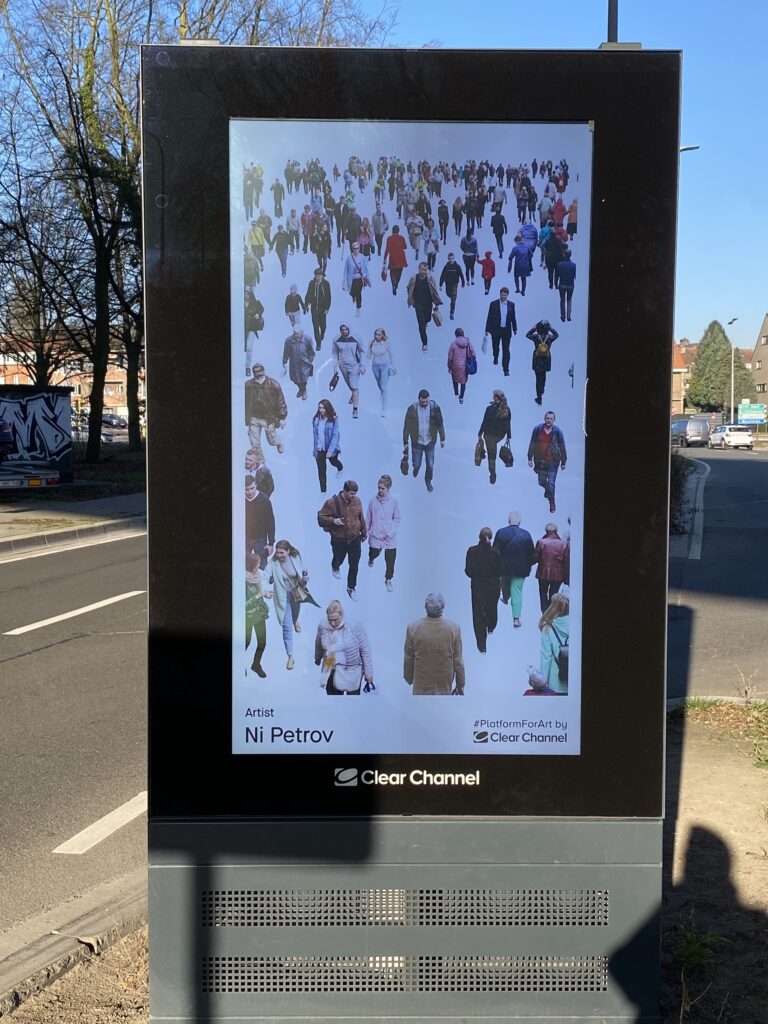
Willl launching such a quantity and variety of artistic proposals, in all directions and without too much discrimination, towards the widest possible audience, make Artcrush into the Facebook of art? Often, it is enough to scan the QR code to obtain all the desired information for art to enter the daily life of the passerby.
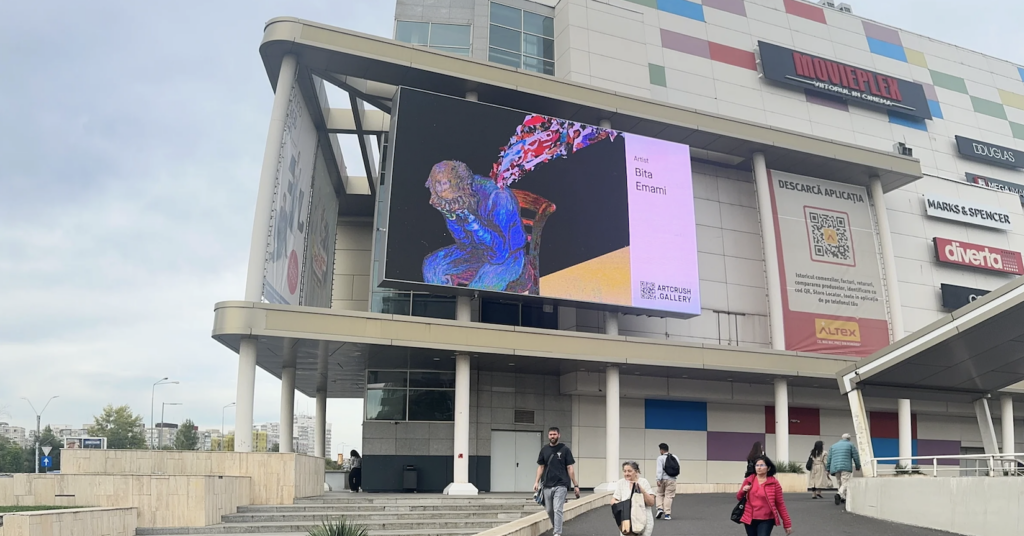
Artcrush could rest on its laurels. However, its managers know that those who don’t innovate fall behind. Therefore, they are no longer limiting themselves to exhibiting digital artists, but also painters, dancers, photographers, sculptors, and musicians. Soon, collectors and galleries will be able to count on national exposure for a few weeks. Artcrush not only focuses on national artists in each country where it operates, but it also organizes exhibitions for the general public on behalf of foundations, regional, national, and international institutions, and public entities such as public transport companies or the National Lottery, for example. In short, Artcrush is now working to create bespoke exhibitions for cities, festivals, and businesses.
Mathieu France concludes: ‘With Artcrush, we want to expand the circle of art lovers and build a broader base of collectors who are willing to invest more modest sums than those currently seen on the art market, by acquiring a digital copy of a work, for example. It’s a democratization of art through blockchain, this technology that allows you to claim ownership of a virtual asset, but then also to sell it to another person. The boundary between physical and digital is blurring. Some artists who have built their reputation in the digital realm are increasingly exhibiting their works in prestigious traditional venues, such as the Venice Biennale. For us, digital is a means of dissemination rather than an end in itself.’